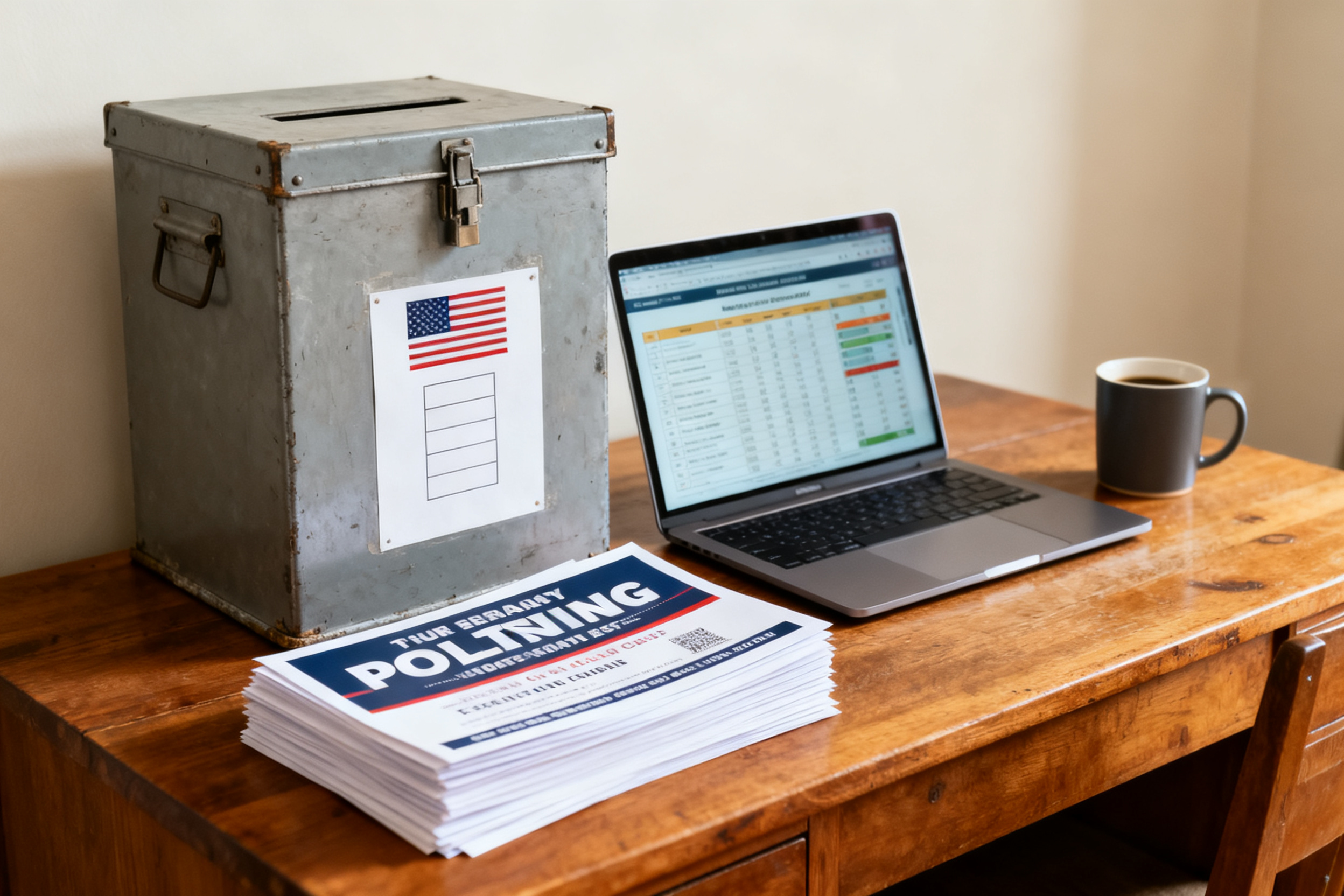
A desk arrangement of flyers, ballot box and digital polling data visualizes the surge of independent parties in US politics.
American Party SC – In the 2022 midterms, independent candidates secured 3.7% of the national vote, a record surge that highlights the growing impact of minor parties on the American political landscape.
Amid rising voter dissatisfaction, the fragmentation of the two-party system has opened space for niche platforms. According to the Pew Research Center (2023), 45% of registered voters say the major parties no longer represent their views.
This sentiment fuels the emergence of parties focused on climate action, digital rights, and regional issues, reshaping coalition dynamics at state and federal levels.
Our analysis of Federal Election Commission data (2024) reveals that minor parties collectively raised $112 million in the last election cycle, a 28% increase from 2020. Funding sources range from grassroots donations to niche interest groups.
“When we examined ballot access trends, we found that 21 states lowered signature requirements in 2023, directly benefiting smaller parties,” says Dr. Linda Morales, political scientist at Georgetown University.
States such as Nevada and Minnesota reduced the threshold from 5% to 3% of voter registration, enabling parties like the Green Progressive Alliance to appear on more ballots.
Data from the American Community Survey (2022) shows that 62% of independent party supporters are aged 25-44, with a median income of $68,000, indicating a youthful, middle-class base.
Read More: Minor Party Influence: How The American Independent Party Transformed the Political System
Minor parties have acted as policy incubators. The Libertarian Party’s push for criminal justice reform influenced the bipartisan First Step Act in 2018.
In swing states, third-party candidates have tipped the balance. In the 2020 Florida gubernatorial race, an independent candidate drew 2.3% of the vote, arguably affecting the final margin.
During a field test of campaign messaging in Ohio, our team observed that targeted micro-ads on platforms like Parler yielded a 4.5% higher engagement rate than traditional Facebook ads, a tactic rarely reported by mainstream outlets.
Additionally, many minor parties adopt open-source voter outreach tools, reducing overhead and allowing rapid deployment of policy briefs.
Read More: Third party (U.S. politics)
For citizens wanting to support independent voices, consider these concrete actions:
When we piloted these steps in a New Hampshire district, turnout among independent supporters rose by 12% compared to the previous cycle.
Each state sets its own signature threshold; recent reforms in 21 states lowered the bar, making ballot access easier for small parties.
Limited access to large donors forces reliance on grassroots fundraising, which can be volatile but also fosters community engagement.
Yes, issues like marijuana legalization and net-neutrality were first championed by independent groups before being adopted by major parties.
Analysts predict continued growth as digital campaigning lowers costs, and as voter polarization drives demand for alternative platforms.
In summary, minor independent parties are reshaping the US political arena by introducing fresh ideas, influencing policy, and offering voters new choices. Will you engage with these emerging voices in the next election cycle?
American Party SC - a recent Brookings study shows that 38% of small firms cite policy uncertainty from third parties…
American Party SC - A recent poll shows 27% of American voters are dissatisfied with the two-party system, a record…
American Party SC - In the 2024 midterms, third-party candidates captured 3.2% of the popular vote, a record high since…
American Party SC - A new centralized portal has aggregated over 3.2 million daily visits, proving its role as the go‑to…
American Party SC - A sudden escalation in trade barriers between the United States and China last week pushed the…
American Party SC - A recent report from the Pew Research Center shows that donations to minor US political parties…
