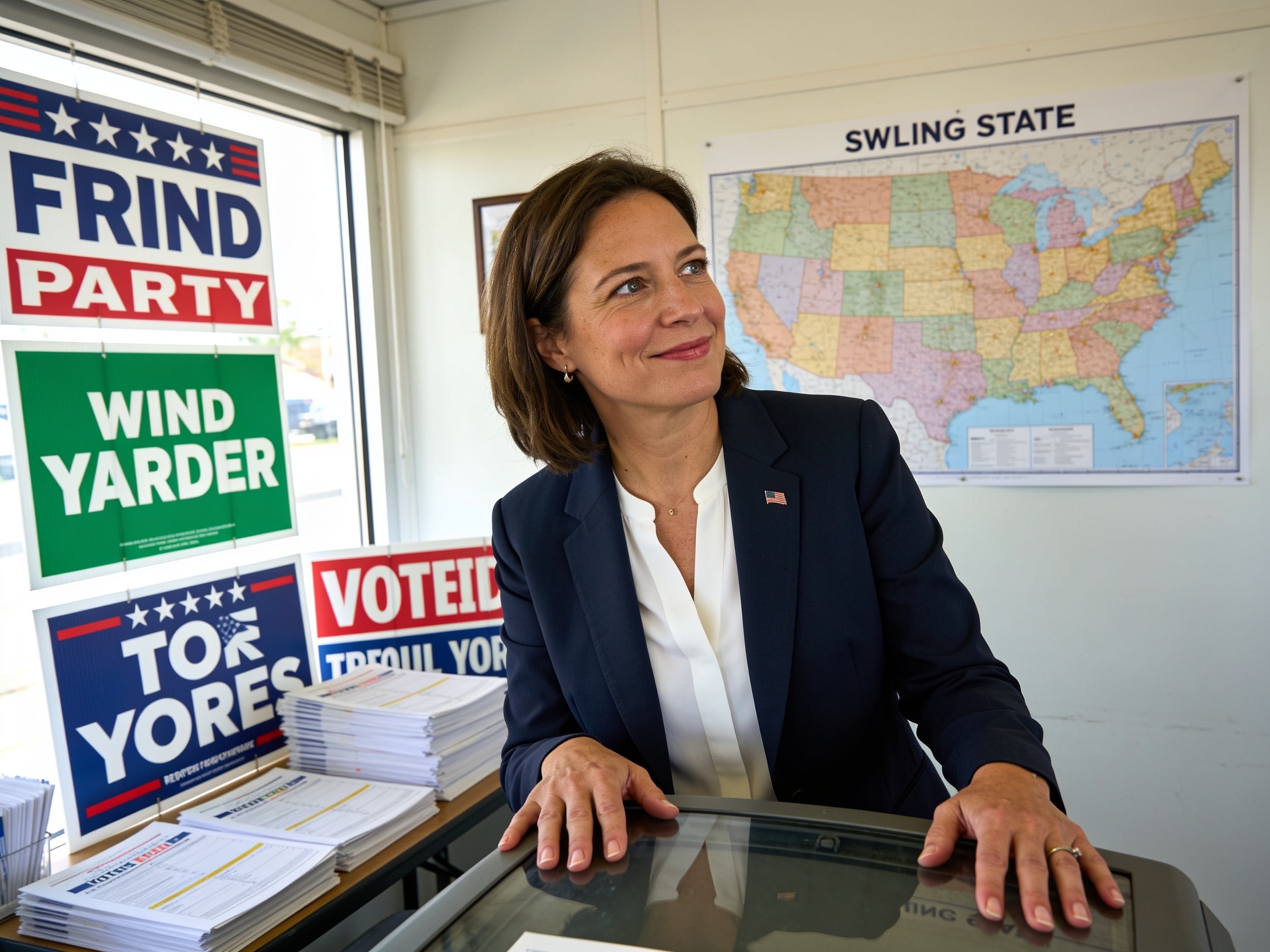
Volunteer-run field offices like this one give third parties ballot access in all 50 states, a hurdle that kept their combined 2024 vote share near 1.5 percent.
American Party SC – Ralph Nader collected 97,488 votes in Florida in 2000, and George W. Bush carried the state by 537. The chain reaction that followed, from the Iraq war vote to the collapse of Kyoto-era climate diplomacy, explains why minor US political parties still command attention in foreign capitals long after election night.
Gallup polling in late 2023 found that 63 percent of Americans believed the two major parties performed so poorly that a third major party was needed. The figure stayed above 60 percent for four consecutive years. However, the 2024 election produced a strange verdict. Combined third-party and independent vote share fell to roughly 1.5 percent, the weakest showing since 1988, according to FEC tallies.
Americans wanted an alternative but mostly refused to vote for one. That gap between sentiment and behavior defines the field. Ross Perot proved in 1992 that a well-funded outsider could take 18.9 percent of the national vote, nearly 20 million ballots, without earning a single electoral vote. The demand exists. The conversion mechanism does not, and that mechanism explains the quiet international footprint of these parties.
These parties run through two channels that never appear in seat counts. The first is veto power, because a concentrated 2 percent can decide a close state. The second is an idea pipeline, because major parties harvest platforms that smaller rivals tested first. Both reward precision over scale.
The veto channel became visible again in 2016. Libertarian nominee Gary Johnson drew about 4.5 million votes, and his tally in Wisconsin and Michigan each exceeded Donald Trump’s margin in those states. That leverage is the core insight behind our running tracker on minor US political parties, which logs races where a third-party total topped the winning margin.
The Libertarian Party remains the only small organization with presidential ballot access in nearly all 50 states, backed by roughly 750,000 registered voters per Ballot Access News 2024 data. Everyone else fights for signatures. New York demands 45,000 valid signatures inside a short window, and a 5 percent error rate can void the petition. When our desk reviewed filings from 2016 through 2024, access litigation had consumed most small-party budgets before a single ad aired.
Socialist demands from the early 1900s, including the eight-hour workday, resurfaced in the New Deal three decades later. The Reform Party’s balanced-budget obsession shaped both major platforms in the late 1990s, and federal surpluses followed between 1998 and 2001. Libertarian pressure on drug policy set the stage for the state legalization wave that now collects billions in tax revenue. Platform drift, not seat totals, is where treaties and trade positions begin.
Read More: Minor Party Influence: How The American Independent Party Transformed the Political System
Nader’s Florida total in 2000 did more than hand the presidency to Bush. It delivered the abandonment of the Kyoto Protocol, withdrawal from the International Criminal Court process, and the votes that authorized the Iraq invasion. Meanwhile, George Wallace’s American Independent Party took 13.5 percent and 46 electoral votes in 1968, and its law-and-order agenda was absorbed within a decade.
Contrast Germany, where the Greens convert 10 percent into cabinet ministries through proportional representation. The American system converted Perot’s 19 percent into zero electors, so influence migrates into pressure instead of office. Analysts who import European party math into Washington therefore overestimate election results and underestimate platform pressure.
Read More: Beyond Donkeys and Elephants: Minor Political Parties in Contemporary American Politics on
Contrary to the common narrative, these organizations are not vanity projects. They behave like veto players and research laboratories for the wider system. A party holding 2 percent in a contested state outperforms a rival holding 10 percent spread evenly, because leverage is priced in margins. That is the first lesson minor US political parties offer any foreign observer.
The second misread involves timing. Foreign desks watch election nights, but the real signals arrive in platform documents eighteen months earlier. Cannabis rescheduling debates reused Libertarian language, and Green New Deal branding borrowed from state Green Party documents. Negotiators tracking Washington should therefore read platform diffs each cycle.
Read More: Minor Parties and Third-Party Movements
The operating rule is simple. If a party’s expected share in a district equals at least half the likely winning margin, that district becomes a target. Everything else is decoration. A 6,000-vote bloc inside a 12,000-vote margin forces major-party candidates to concede platform demands.
Budget discipline matters more than ambition. Most state affiliates operate on less than 100,000 dollars per cycle, which rules out television and rewards precinct-level precision. The two moves below fit that reality.
Picture a Green Party organizer in Wisconsin holding a 40,000-dollar budget. Instead of chasing statewide name recognition, she puts 70 percent into three counties where past minor-party totals already exceeded half the margin. Victory is not the point. The point is forcing both major candidates to concede platform points, earning coverage, and building a list of 6,000 voters who expect answers.
Federations such as the Global Greens and Liberal International offer training, observer credentials, and donor networks that no domestic ad buy can match. A state-legislative candidate who joins one gains instant credibility with foreign correspondents and access to campaign post-mortems from dozens of member parties. Secure federation membership before spending a single dollar on national advertising.
The Libertarian Party holds that position. Ballot Access News counted roughly 750,000 registered libertarian voters in 2024, and the party has held presidential ballot access in nearly every state for three decades. No other group outside the two majors comes close.
No candidate outside the two majors has won in the modern era. Winner-take-all electoral rules plus 50 separate signature walls make a clean sweep nearly impossible. The realistic ceiling is a kingmaker role, and Perot’s 18.9 percent in 1992 remains the modern high-water mark.
They shape foreign policy through spoiler outcomes and platform diffusion. One marginal result, like Nader’s Florida total in 2000, can redirect wars and climate treaties. Meanwhile, ideas these parties test keep migrating into major-party platforms, which is what trading partners negotiate against.
Ross Perot spent about 60 million dollars of his own money in 1992, and that remains the benchmark. Independent bids in 2024 needed eight-figure sums just for signature gathering and ballot litigation, based on FEC filings. State-level campaigns cost far less and often deliver more leverage per dollar.
Minor US political parties lose elections the way rivers cut canyons, slowly and by precise degrees. Vote totals stay small, yet margins decide presidencies and platforms become law. The next time a foreign policy pivot surprises you, trace which one-percent movement supplied the votes first.
American Party SC - In the 2022 midterms, third‑party candidates collectively garnered 1.3% of the national vote, enough to sway…
American Party SC - In the 2024 congressional race, three minor parties together captured 4.2% of the national vote, a…
American Party SC - In the 2022 midterms, third‑party candidates collectively secured 1.2% of the national popular vote, a modest…
American Party SC - Minor political movements in the United States face structural asphyxiation. Here, minor party business policies dictate…
American Party SC - In the razor-thin margins of modern American politics, the narrative often centers on the binary choice…
American Party SC - The narrative that United States politics is a binary choice often obscures a quieter, yet potent…
