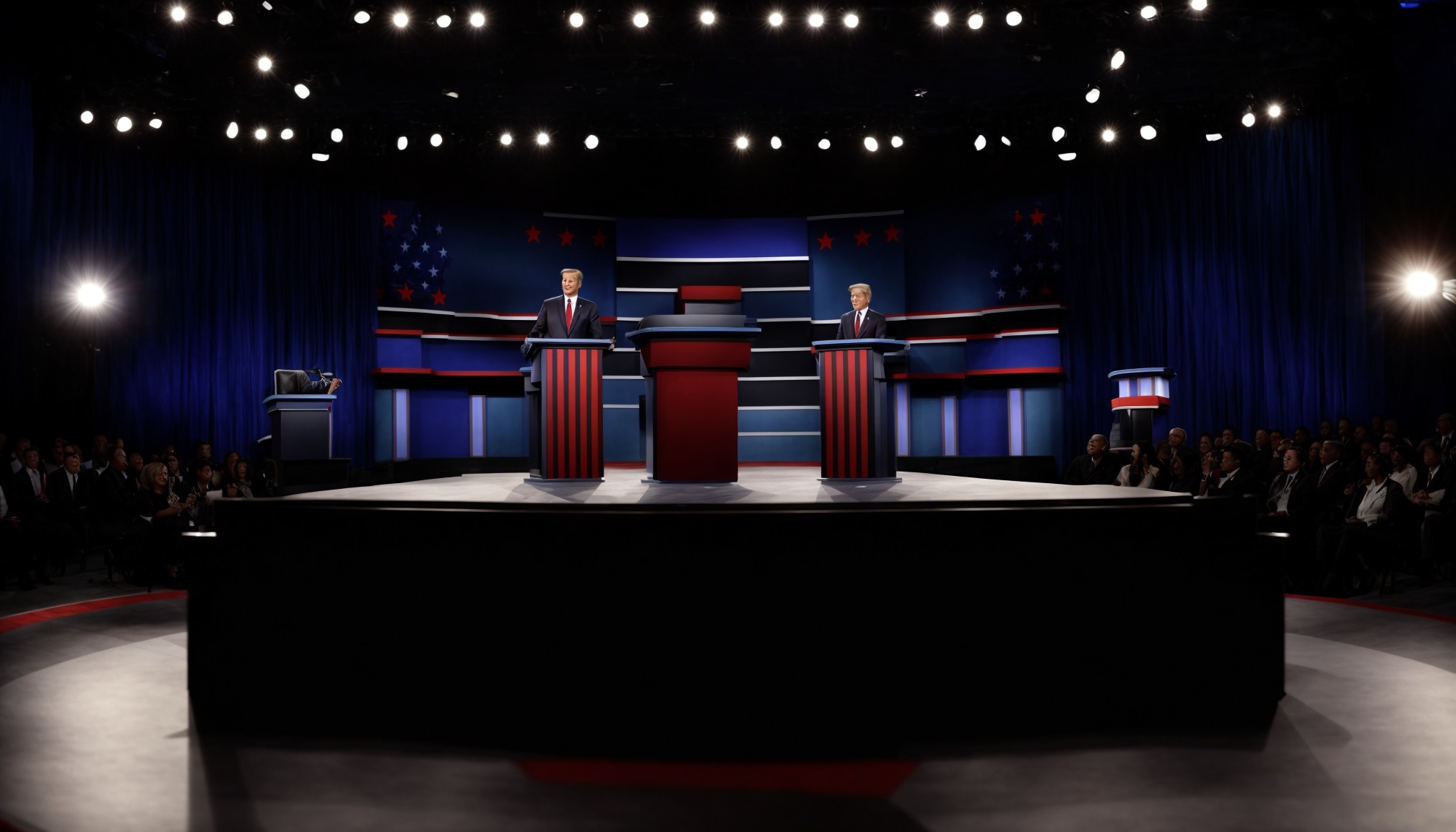
The American Party | South Carolina – The role of third parties presidential debates has become more visible as independent and minor-party candidates test the dominance of the Democratic and Republican campaigns on the national stage.
Third parties presidential debates sit at the crossroads of public expectations and institutional control. Presidential debates are technically designed to inform voters, yet rules about who can appear often exclude alternative voices. These rules, set by debate commissions and media networks, rely heavily on polling thresholds and ballot access. As a result, only a handful of independent or minor-party candidates have ever appeared on the main stage.
The most famous example came in 1992, when Ross Perot joined the debates alongside George H. W. Bush and Bill Clinton. His presence showed how a strong outsider can change the tone of a campaign. Perot’s focus on the national deficit forced both major parties to answer detailed economic questions. That moment still influences how strategists think about third-party candidates today.
Despite that history, significant barriers remain. Polling criteria tend to favor candidates with early name recognition and strong funding. Media outlets also give limited coverage to smaller campaigns, which then struggle to reach the polling numbers required to qualify for debates. This circular problem keeps many voices off the stage.
When third-party candidates find a way into the conversation, they often shift debate topics and priorities. Instead of repeating talking points crafted by the two major parties, they highlight issues such as electoral reform, campaign finance, climate policy, or civil liberties with a different emphasis. In doing so, they can widen the policy spectrum for viewers at home.
Even when excluded from the main stage, these campaigns can still influence agendas. Journalists sometimes press major-party nominees on issues championed by credible independents or minor parties. Social media amplifies this effect, as clips from town halls or online forums showcase arguments that never make it into the televised events. This digital echo can push moderators to ask tougher or more diverse questions.
Occasionally, major-party candidates preemptively adopt certain proposals to neutralize outside challenges. For example, stronger ethics rules, term-limit debates, or stricter lobbying controls often emerge from ideas promoted by figures outside the two-party establishment. Over time, these proposals can move from the margins into mainstream platforms.
Control over debate access is crucial to understanding third parties presidential debates. The institutions that organize these events, usually in partnership with major media networks, frame themselves as neutral referees. Yet their criteria can reflect the interests of the existing party structure. High polling thresholds, strict deadlines, and national ballot access requirements all tend to reinforce the status quo.
Critics argue that polling-based rules are especially unfair. Surveys often undercount lesser-known candidates, and early polls typically measure name recognition rather than real support. In addition, independent and minor-party campaigns start with fewer resources, making it harder to build awareness before key deadlines. Because of these structural challenges, very few outsiders break through.
Supporters of strict rules respond that including all candidates would clutter the stage and confuse voters. They contend that debates should focus on those with a plausible path to victory, not symbolic campaigns. The tension between inclusivity and practicality defines much of the debate-access controversy.
Baca Juga: Survei terbaru tentang kepercayaan publik terhadap sistem dua partai di Amerika
Public opinion plays a central role in the politics of third parties presidential debates. Many voters express frustration with a system that seems to offer only two viable options. When debate stages exclude additional voices, this frustration can deepen, feeding the belief that the process is tilted toward established interests.
At the same time, some viewers worry that third-party candidates could act as spoilers. In a closely divided electorate, even a small share of votes drawn away from one major candidate might alter the outcome in key states. Major parties often use this argument to discourage support for alternatives and to justify restrictive debate rules.
However, research on so-called spoiler effects shows a more complex picture. In some elections, strong third-party bids increase turnout by energizing disengaged citizens. These campaigns can also reveal hidden preferences that the two major parties have ignored. Even if they do not win, they may legitimize new policy ideas or expose dissatisfaction that eventually reshapes future platforms.
Looking ahead, technology and changing media habits may redefine third parties presidential debates. Traditional television events still matter, but many voters now consume politics through streaming platforms, podcasts, and social media clips. Independent candidates can organize their own debates, town halls, or online forums and distribute them directly to supporters.
Some reform advocates call for more inclusive formats, such as tiered debates or regional forums that feature additional candidates. Others propose lowering polling thresholds or using alternative criteria, like small-donor support, to determine eligibility. These ideas mirror reforms already tested in party primary debates, where broader stages have introduced lesser-known figures to national audiences.
The concept of third parties presidential debates will likely evolve as public expectations shift. Younger voters often express a stronger appetite for diverse viewpoints and less loyalty to traditional party labels. Their media consumption patterns also favor nontraditional events that feel more conversational and less scripted.
Ultimately, the long-term impact of third parties presidential debates depends on how institutions respond to voter demand for greater choice and transparency. If organizers maintain narrow access, alternative candidates will continue to operate largely outside the main stage, using parallel channels to reach the public. If rules loosen, debates could become more unpredictable but also more representative of the full spectrum of American political opinion.
For now, the struggle over third parties presidential debates remains a barometer of wider dissatisfaction with the two-party system. The way future campaigns navigate this struggle will shape not only who appears behind the podiums, but also which ideas define the boundaries of national political conversation.
