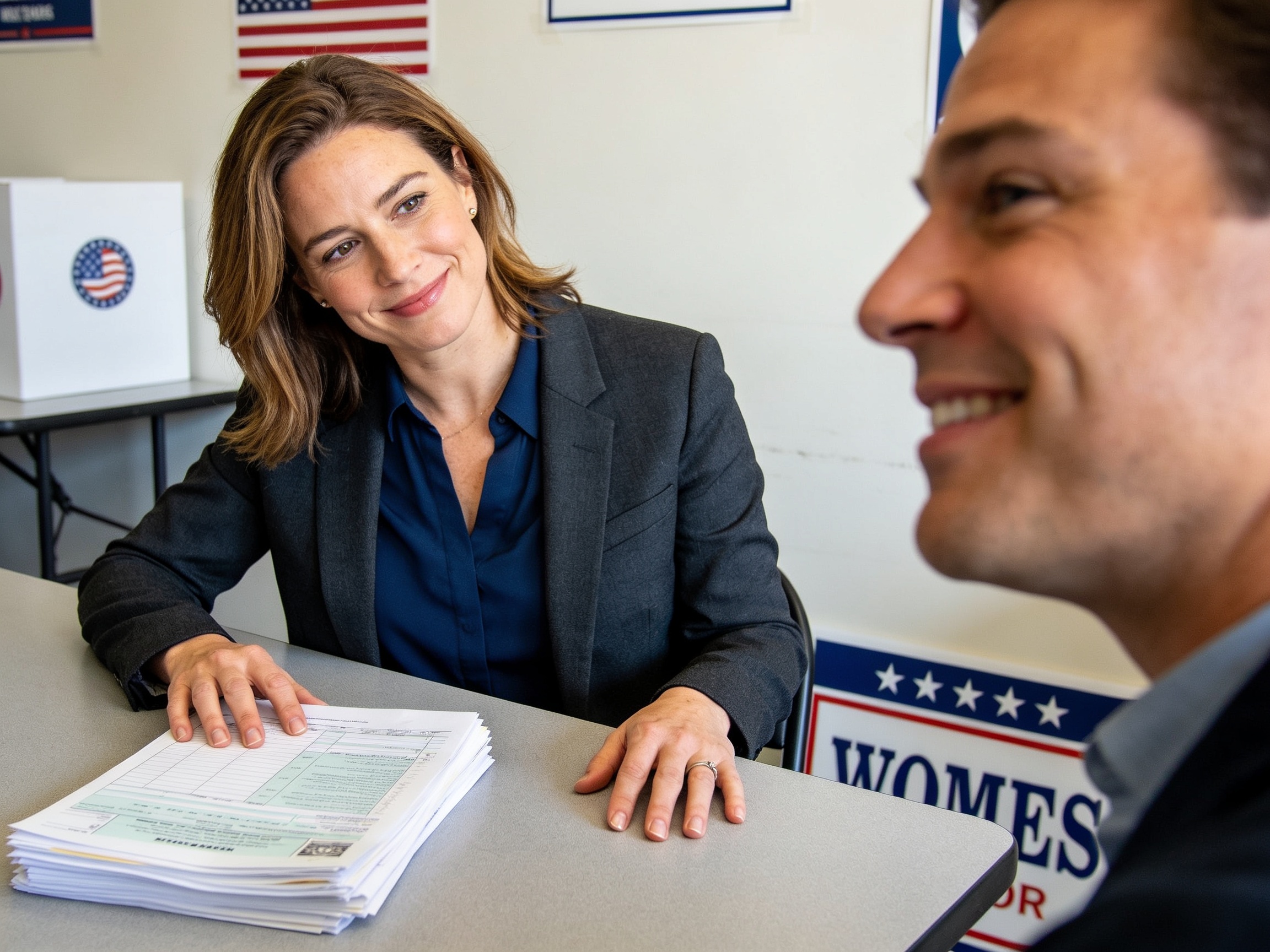
A local organizer examines campaign finance rules, highlighting how minor party business policies drain campaign budgets before reaching voters.
American Party SC – Minor political movements in the United States face structural asphyxiation. Here, minor party business policies dictate electoral survival far more than voter demand.
Getting on the ballot is the first financial hurdle for any independent candidate. In states like Georgia or North Carolina, signature requirements demand extensive paid petition drives. When we analyzed the 2022 midterms, the cost per valid signature frequently exceeded $12. Securing hundreds of thousands of signatures means spending over $500,000 just to be visible to voters.
These financial demands force small parties to fundraise endlessly just to meet administrative thresholds. The Libertarian and Green parties collectively spent nearly 40% of their 2022 cycle budgets on ballot access alone, according to Federal Election Commission filings. Meanwhile, major parties bypass this toll because their automatic ballot access is guaranteed by state law. This discrepancy shows how minor party business policies function as a built-in exclusionary mechanism.
Corporate political action committees operate strictly on return on investment. They fund campaigns that yield legislative access, inherently freezing out third parties. OpenSecrets data from 2022 reveals that over 95% of corporate PAC contributions flow directly to incumbent Democrats or Republicans. This leaves less than 5% for challengers, let alone minor party candidates.
Beyond direct contributions, federal compliance costs punish smaller operations disproportionately. Hiring a compliance officer to navigate FEC reporting rules costs roughly $80,000 annually. For a minor party raising $3 million total, this represents a crushing 2.6% overhead. For a major party raising billions, the same compliance cost is a rounding error. Consequently, minor party business policies create a steep financial barrier that prevents grassroots growth.
Read More: Giving Minor Parties a Chance : Democracy Journal
The Commission on Presidential Debates mandates a 15% polling threshold for participation. This rule acts as a market protectionist policy for the duopoly. Reaching 15% in national polls requires massive advertising budgets. Since corporate donors freeze them out, third parties cannot afford the ad buys needed to poll high enough to enter the debates. It is a closed loop designed by the major parties.
In 2020, the Libertarian nominee Jo Jorgensen was on the ballot in all 50 states. She appeared alongside the Green Party candidate Howie Hawkins. Despite this massive organizational achievement, she polled only around 2% nationally. Without debate access, her campaign could not reach the broad audience required to boost polling numbers. Major party candidates receive millions in free media exposure through these debates. This structural isolation proves that the debate commission operates as an economic gatekeeper. Minor party business policies within these commissions protect the two-party market share aggressively.
Read More: Minor Parties
One overlooked aspect of campaign finance involves corporate employer match programs. Many large corporations match employee donations to political causes to encourage civic engagement. However, internal corporate guidelines almost universally restrict matching funds to major party candidates. This means a software engineer donating $500 to a Green Party candidate receives zero corporate match. That same donation to a Democrat receives a full $500 match, instantly doubling the major party revenue. This implicit corporate subsidy entrenches the duopoly while penalizing political diversity.
After examining corporate handbooks from Fortune 500 companies, we found this exclusion is standard practice. It forces employees who want their political dollars maximized to funnel money strictly to the duopoly. The economic incentive structure fundamentally distorts the political marketplace. These restrictive minor party business policies ensure third parties never acquire the institutional funding needed to scale.
Read More: The Politics Shed
Imagine leading a minor party in Pennsylvania. You must gather 5,000 signatures by a strict deadline. However, election boards routinely invalidate signatures, so you must plan for 10,000 to survive legal challenges from major party lawyers. At $10 per signature, you need $100,000 just for petitions. If your total campaign budget is $200,000, half your money disappears before a single voter hears your message. You cannot afford television ads, meaning voter recognition stays near zero. This is the daily reality for minor party organizers battling systemic financial hurdles.
Major parties regularly deploy legal teams to challenge minor party signatures over technicalities like printed names versus cursive. Defending against these ballot access lawsuits costs between $50,000 and $150,000 per state. Therefore, Pennsylvania organizers must budget approximately $250,000 solely for ballot preservation. This sum equals the entire advertising budget for many grassroots campaigns. The legal and administrative costs imposed by minor party business policies literally suffocate political competition before Election Day.
These policies force small parties to spend massive portions of their budget on petition signature gathering and legal defense. Major parties enjoy automatic ballot access by virtue of previous election totals, while minor parties must pay exorbitant tolls that drain campaign resources. This leaves virtually no funding for actual voter outreach or advertising.
Corporate PACs seek legislative access and predictable returns on investment. Third parties lack committee assignments and institutional power, making them poor financial investments. Over 95% of corporate PAC money flows to major party incumbents to secure access.
The Commission on Presidential Debates requires candidates to average 15% in national polls to participate. Since minor parties lack the corporate funding to buy ads needed to reach 15%, this rule locks them out of national exposure entirely.
The structural barriers facing alternative movements are primarily economic, not ideological. Until the financial architecture of American elections shifts, the duopoly will maintain its market dominance. Will American voters ever demand an open political marketplace?
American Party SC - In the 2024 congressional race, three minor parties together captured 4.2% of the national vote, a…
American Party SC - In the 2022 midterms, third‑party candidates collectively secured 1.2% of the national popular vote, a modest…
American Party SC - Ralph Nader collected 97,488 votes in Florida in 2000, and George W. Bush carried the state…
American Party SC - In the razor-thin margins of modern American politics, the narrative often centers on the binary choice…
American Party SC - The narrative that United States politics is a binary choice often obscures a quieter, yet potent…
American Party SC - While the two major political giants spent nearly $14 billion combined during the 2020 election cycle,…
