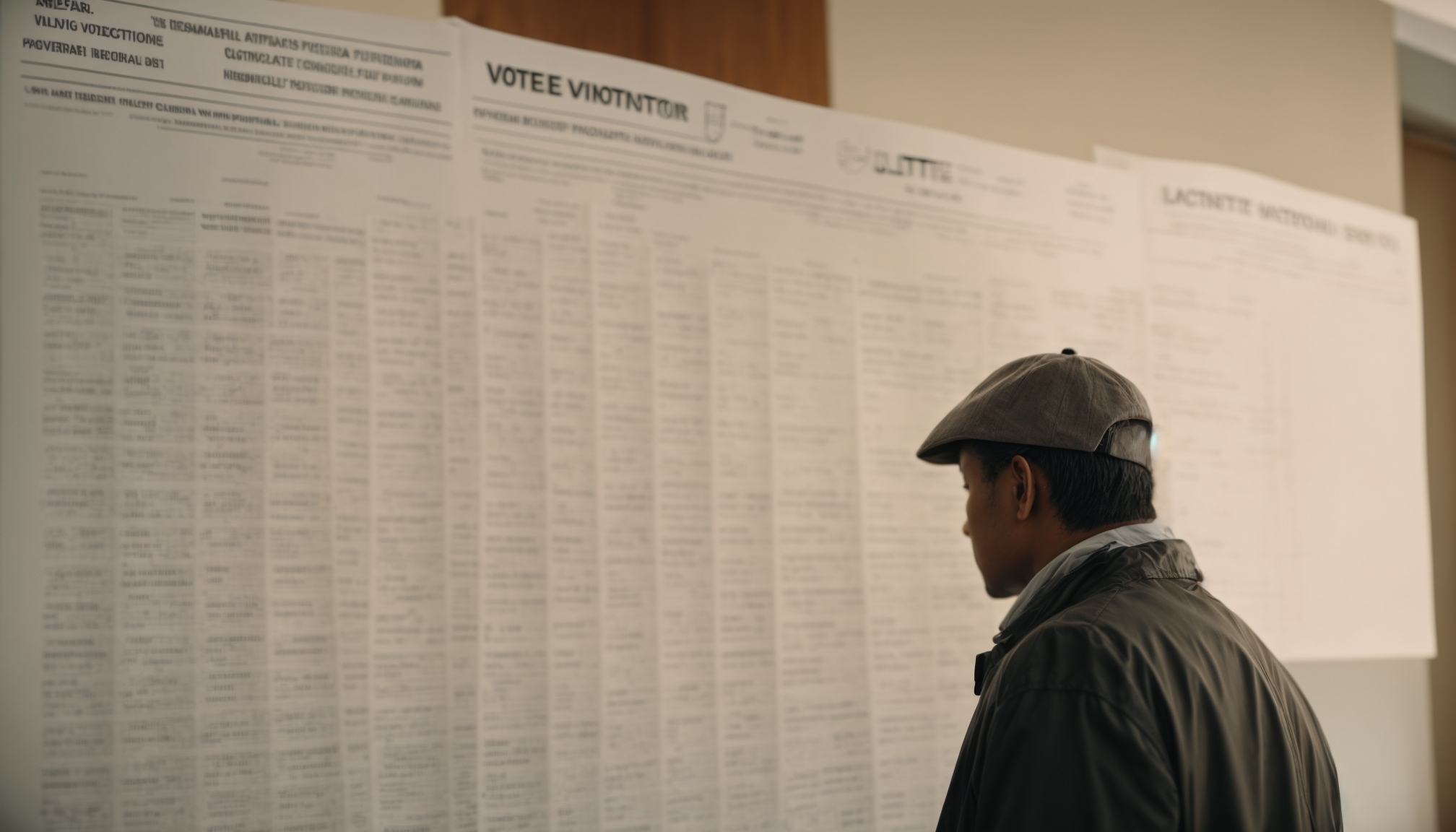
The American Party | South Carolina – A recent special election featuring 22 names on the ballot has highlighted how complex voter choice in elections becomes when many candidates compete at once.
When dozens of contenders enter a race, voter choice in elections does not expand in a simple linear way. Voters do not calmly rank every name. Instead, they rely on shortcuts such as party labels, endorsements, identity cues, or a familiar surname. These mental strategies help them cope with information overload, but they can also distort preferences.
Political scientists describe this as a problem of bounded rationality. Voters have limited time and attention, so they rarely study all 22 candidates in detail. Many people identify one or two acceptable options and ignore the rest. As a result, small advantages in name recognition or media coverage can matter more than detailed policy positions.
In races crowded with long-shot hopefuls, campaigns focus on becoming one of the “serious” options in the minds of voters. That label, once formed, strongly influences voter choice in elections and can make the difference between winning and vanishing near the bottom of the results.
A large field also makes vote splitting more likely. When several candidates appeal to similar groups, they divide that bloc of voters among themselves. Meanwhile, a rival with a more unified base can win with a relatively small share of the total vote. This dynamic often pushes parties and interest groups to pressure weaker candidates to drop out.
The familiar “spoiler” narrative grows out of this reality. A candidate with modest support might not win, but can change voter choice in elections by siphoning just enough votes from a front-runner to hand victory to another contender. In plurality systems, where the top vote-getter wins even without a majority, a candidate can prevail with less than 30 percent in a 22-person race.
However, spoiler talk can oversimplify what happens in real contests. Not every supporter’s second choice is obvious, and some voters participate only because a particular contender is on the ballot. Even so, parties understand that a fractured field carries risks and often respond by coordinating endorsements or funding to narrow the options.
In complex races, party labels become powerful guides for voter choice in elections. Many people treat party affiliation as a summary of a candidate’s ideology, values, and likely behavior in office. This shortcut helps them decide quickly, especially when they recognize only a handful of names on a long list.
Besides parties, voters also lean heavily on endorsements and institutional signals. Backing from unions, professional associations, or prominent community leaders reassures uncertain citizens. Media coverage amplifies these cues, turning some candidates into perceived front-runners while others struggle to escape obscurity.
Read More: How voters use news and cues to make political decisions
Ballot design itself can shape perceptions. When 22 choices appear in a single column, some voters only seriously scan the top names before fatigue sets in. Even the order of candidates can subtly influence voter choice in elections, especially among those who feel disengaged or under-informed.
Not all voters simply pick their favorite. In crowded fields, many engage in strategic behavior. They ask not only “Who do I like most?” but also “Who can actually win?” Strategic voting becomes more common when polls suggest that only a few candidates are viable.
Some citizens abandon their ideal choice to back a more competitive option, hoping to block a disliked rival. Others stay loyal to a long-shot campaign to send a message, build a movement, or influence future debates. In every scenario, strategic decisions reshape voter choice in elections and the final distribution of support.
Campaigns respond by framing the race as a clear contest between two or three serious alternatives, even when 19 other names remain on the ballot. This framing encourages voters to treat minor candidates as wasted options and reinforces the tendency toward tactical choices.
Crowded races raise deeper questions about polarization and representation. With 22 candidates, the electorate might contain many ideological shades and social identities. A winner with a narrow plurality may represent only a slice of the spectrum, even though the ballot appeared broad and inclusive.
Reform debates focus on whether different electoral rules could better capture voter choice in elections. Ranked-choice voting, for example, lets people list preferences in order rather than naming a single favorite. This system can reduce fears about spoilers and encourage more sincere voting.
Other proposals, such as runoff elections or approval voting, also aim to ensure that winners command broader consent. Each design has trade-offs, from complexity to cost, but all seek to align outcomes more closely with the full range of voter preferences displayed in multi-candidate contests.
For citizens, understanding how these systems work matters as much as following individual campaigns. When people grasp how their ballot translates into power, they can use their options more effectively and interpret results more accurately, especially when the field is unusually crowded.
A special election with 22 contenders shows that more names on the ballot do not automatically mean more meaningful options. Instead, the structure of the contest, the flow of information, and the behavior of parties and media all constrain voter choice in elections in subtle ways.
This kind of race highlights how shortcuts, strategic calculations, and electoral rules interact. It also underscores the importance of institutional design for fair outcomes. When systems reflect how people actually make decisions under pressure and uncertainty, democracy gains both legitimacy and resilience.
Ultimately, a crowded field demonstrates the promise and limits of pluralism. Voters can see many possibilities, yet only one person will take office. The path from a long list of names to a single winner runs straight through voter choice in elections, and understanding that journey helps societies strengthen their democratic practice.
